
Richmond Hill, Ontario, 14 June 2022 — The Transportation Safety Board of Canada (TSB) today released its investigation report (A20O0029) into the March 2020 runway incursion and risk of collision between two aircraft at the Toronto/Lester B. Pearson International Airport, Ontario. There were no injuries.

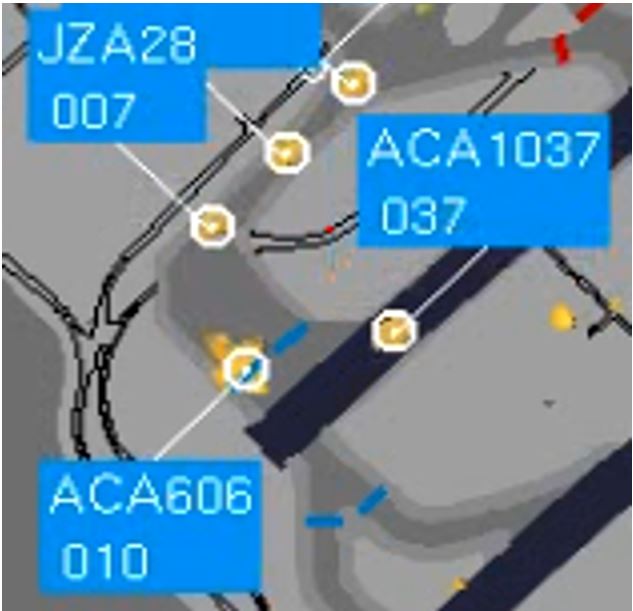
On 07 March 2020, at 0948 local time, an Air Canada Embraer 190 was conducting a takeoff from Runway 06L at Toronto/Lester B. Pearson International Airport, Ontario. Shortly after the Embraer 190 had begun its take-off roll, an Air Canada Boeing 777 was instructed to line up on Runway 06L. As the Embraer 190 was accelerating on its take-off roll, it struck a bird. The flight crew initiated a rejected takeoff and made a radio call to report that they were rejecting the takeoff. Neither air traffic control nor the Boeing 777 flight crew heard this radio call because the Boeing 777 flight crew was reading back their take-off clearance on the same frequency. As the Boeing 777 was accelerating on its take-off roll, the flight crew observed that the Embraer 190 was still on the runway and initiated a rejected takeoff. Both aircraft eventually exited the runway and returned to the terminal. There were no injuries nor damage to either aircraft.
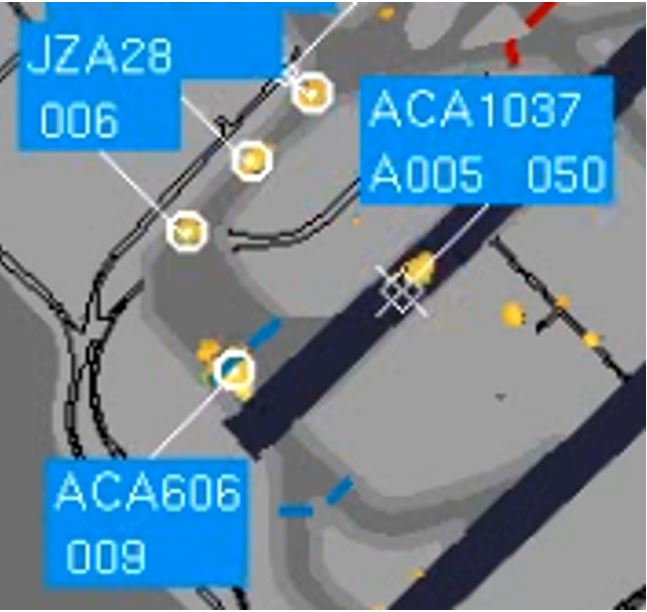
The investigation found that the Embraer 190’s transponder transmitted that the aircraft was in air after the aircraft accelerated past 50 knots. As a result, although compliant with current standards, an inaccurate in-air status was transmitted while the aircraft remained on the ground during its take-off roll and rejected takeoff. The use of this data by NAV CANADA’s runway incursion monitoring and conflict alert sub-system (RIMCAS) led to the inaccurate identification of the Embraer 190 and the Boeing 777 as in air while these two aircraft were still on the ground. This resulted in late and inaccurate RIMCAS alerts and delayed the air traffic controller’s response to the risk of collision. The risk was mitigated once the Boeing 777 flight crew rejected their takeoff after recognizing that the Embraer 190 was still on the runway ahead of them.
The risk of collisions from runway incursions has been on the TSB Watchlist since its inception in 2010 and calls for effective defences tailored to address identified hazards at airports and in aircraft, vehicles, and air traffic service facilities across Canada.
Following the occurrence, the TSB issued Aviation Safety Advisory A20O0029-D1-A1 to highlight the importance of accurate flight status data being validated and transmitted by transponders and how this data is received, validated, and used by runway monitoring and conflict alert systems to ensure maximum safety benefit.
As a result, NAV CANADA published Urgent ATCI – ATC Information Bulletin 2020-003 for all Toronto Tower personnel. The bulletin cautioned controllers that RIMCAS Stage 1 and Stage 2 alerts may not be generated when certain aircraft are departing, and reminded controllers to monitor these situations closely.
See the investigation page for more information.
The TSB is an independent agency that investigates air, marine, pipeline, and rail transportation occurrences. Its sole aim is the advancement of transportation safety. It is not the function of the Board to assign fault or determine civil or criminal liability